Skip to the patterns
Crochet·Rituals
Menu

Amigurumi 3 Laid out for paper No account, no download

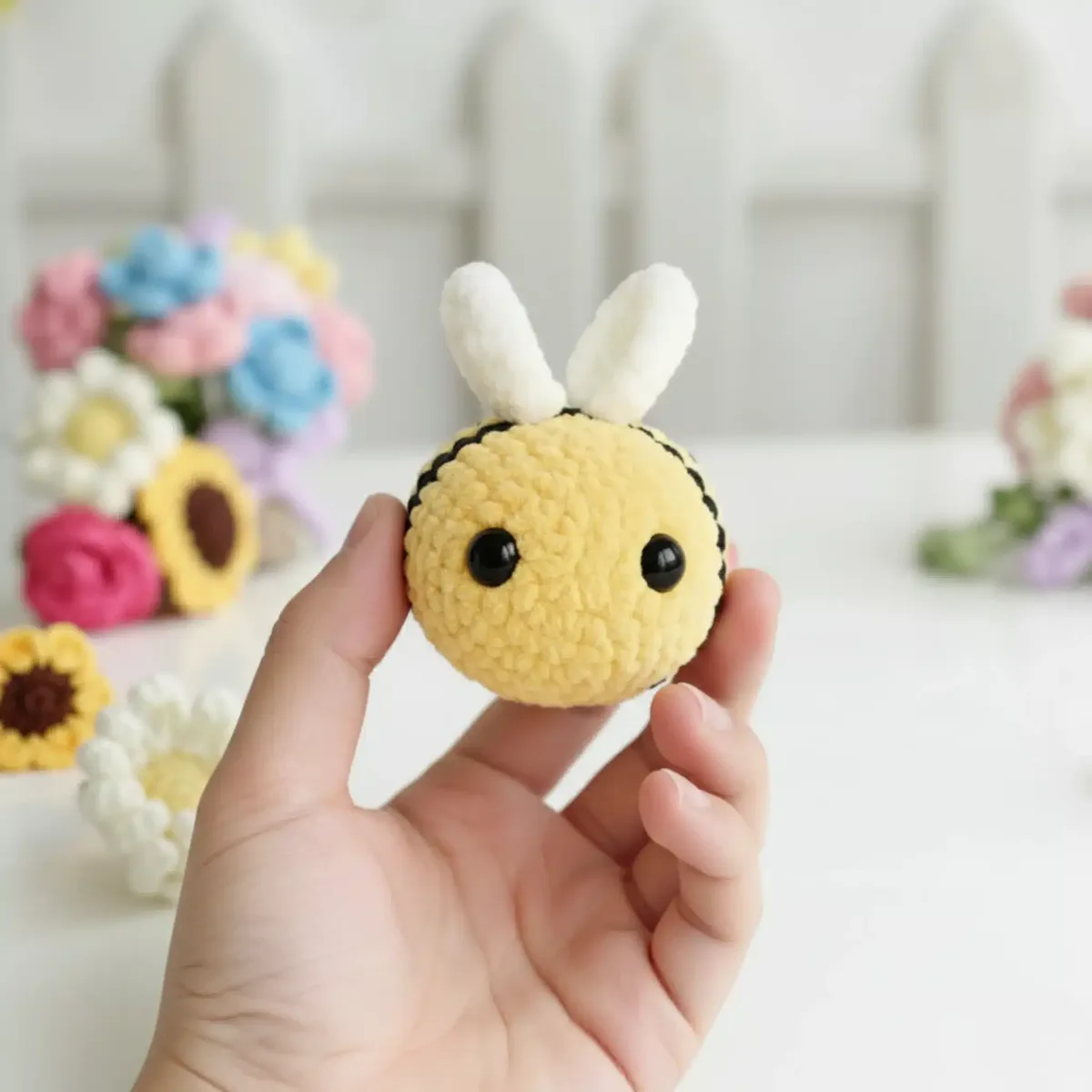
Amigurumi bee pattern with a striped body and wings

Amigurumi bee worked in rounds with yellow-black stripes, white wings, and a 4.5mm hook.

Jump to the rounds Pin it
Amigurumi bee pattern with a striped body and wings
Amigurumi · Worsted
Skill
Intermediate
Time
3-4 hours
Yarn weight
Worsted
Hook
4.5 mm
Rounds
3

Intermediate

What the pattern's own author called it. Nothing here is graded again.

Worsted

What the sample was worked in. Any weight works; the size moves with it.
3

Each one is typed out whole and gets its own line.

This bee is built in two parts worked separately and joined at the end: a single body worked in continuous rounds with a yellow-black stripe sequence, and a pair of flat wings worked from a magic ring up to 24 stitches each. Have Chenille Velvet yarn ready in yellow, black, and white, a 4.5mm hook, two 12mm safety eyes, fiberfill, and a tapestry needle before starting the first round.

Common mistakes and their fixes

Losing track of stripe rounds
Mark the first round of each color block (7, 11, 15) with a locking stitch marker so you can confirm where one color ends and the next begins.
Uneven wing increases
Count stitches at the end of each wing round and confirm you have 6, 12, 18, then 24 before moving on; an early miscount throws off the whole disc shape.
Inserting eyes after stuffing
Insert and secure the safety eyes before the body is stuffed and closed, since the backing washers can't be reached once fiberfill is packed in.

The materials list

  1. For this project, you’ll need Chenille Velvet yarn in three colors:
  2. Yellow – for the bee’s signature stripes
  3. Black – for contrasting stripes
  4. White – for the delicate wings
  1. 4.5 mm crochet hook (or adjust to match your yarn weight)
  2. Two safety eyes, 0.47 inches or 12mm in diameter
  3. Polyester fiberfill or similar stuffing material
  4. Tapestry needle for finishing
  1. this …

Listed by the pattern's own author, in their words.

Key to this pattern, 7 short forms

Wing Construction

Round 1

Begin with 6 single crochets in a magic ring

Round 2

Increase to 12 stitches with 6 increasesRound 3: Work to 18 stitches

Round 4

Complete with 24 stitches Pro Tip: If you’d like larger wings, add an additional round with increases evenly distributed (work 3 single crochets followed by 1 increase around).

Assembly, in order

Step 1Once you’ve completed the body and both wings, attach the wings to the back of the bee’s body using your tapestry needle and matching yarn. Position them symmetrically for the best appearance. Weave in all loose ends securely.

Check these before you start

  • The 4.5mm hook is sized for the chenille velvet's thickness; sizing down will tighten stitches and make the pile harder to work through.
  • Use a locking marker on round 1 of each color block (rounds 7, 11, and 15) so the stripe sequence stays accurate even if you set the piece down between sessions.
  • Chenille velvet shows tension unevenness more than smooth yarn, so keep your stitches consistent across the stripe rounds for a clean color break.

On one line

Rounds3
LevelIntermediate
Time3-4 hours
Hook4.5 mm
YarnWorsted

Set-up

  • Check that you have enough yellow and black yarn on hand before the stripe rounds begin, since running short mid-color is hard to fix invisibly.
  • Work a small swatch with the chenille velvet first, since this fiber behaves differently from smooth worsted yarn and affects how tight your stitches sit.
  • Read the eye placement instructions before you reach that point in the body, since the eyes need to go in before the head closes and cannot be adjusted afterward.

Finishing

  1. Weave in all ends left from the yellow-to-black and black-to-yellow color changes before closing the body.
  2. Stuff the body firmly with fiberfill before working the final closing rounds, packing evenly so the stripes sit smooth and round.
  3. Attach both wings to the back of the body with a tapestry needle and matching yarn, positioning them symmetrically before weaving in the last ends.

Construction

Each wing round adds exactly 6 stitches in evenly spaced increases (6, then 12, then 18, then 24), the standard flat-disc build that keeps a wing lying flat rather than cupping.

The body holds a fixed 36 stitches from round 7 through round 18; only the yarn color changes across that span, so the stripes read as clean bands on an unchanging cylinder rather than as part of any shaping.

Time per section

Body foundation and striped roundsabout 2 to 3 hours because of the full yellow-black-yellow sequence spanning rounds 7 through 18
Wings (both)about 30 to 45 minutes because each wing is only a few rounds worked from a magic ring up to 24 stitches
Stuffing, closing, and assemblyabout 30 minutes because it involves firm stuffing, closing rounds, and symmetrical wing placement

Photographs of this one

Every one was taken by whoever published the pattern, in the order the source listed them.
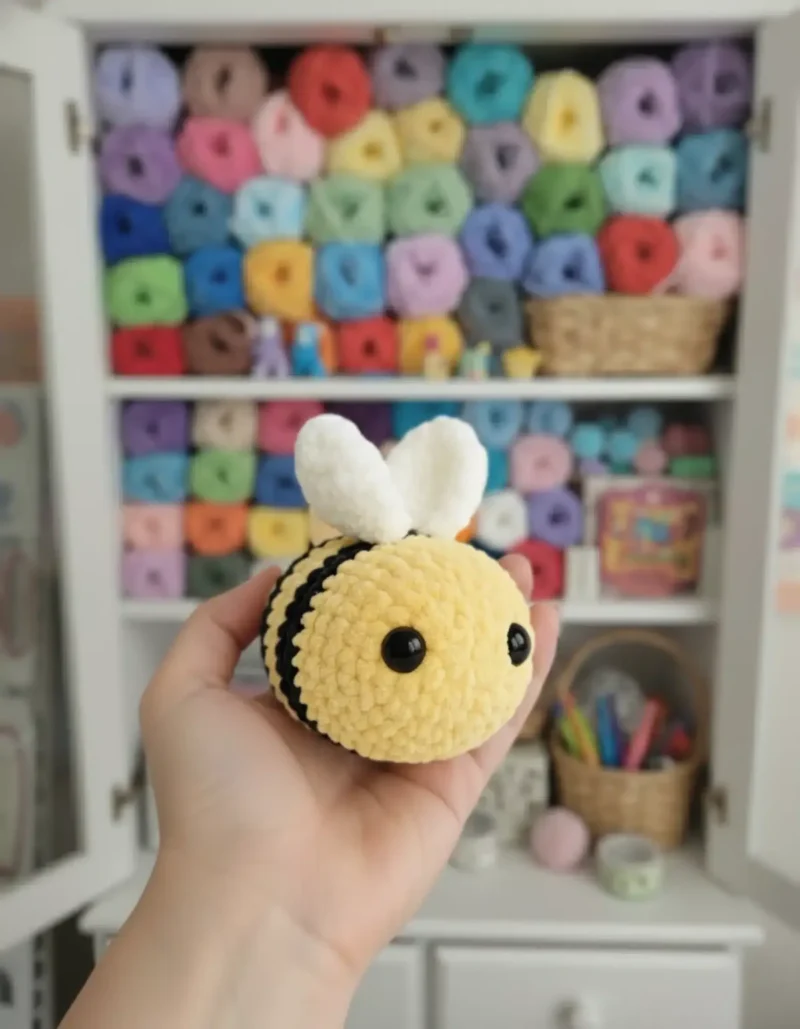
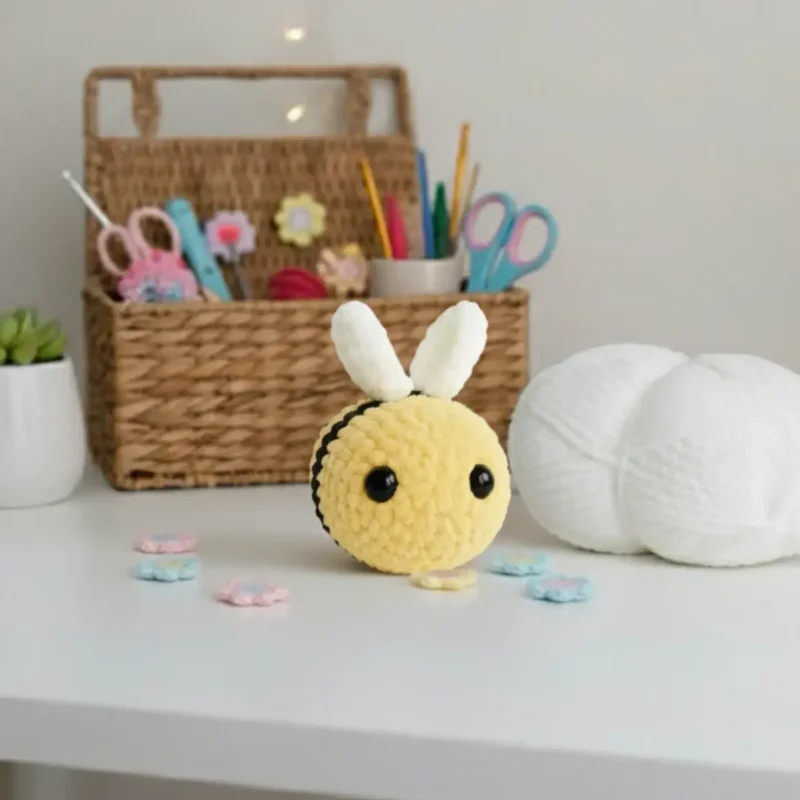
Amigurumi bee pattern with a striped body and wings — photo 2
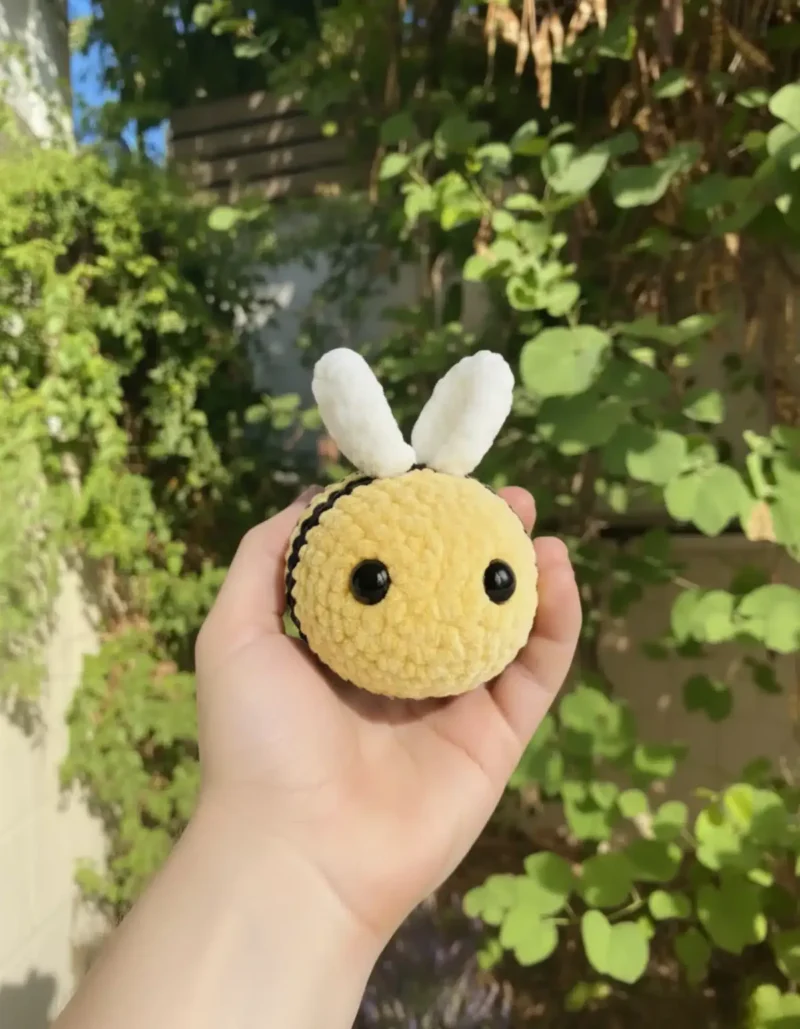
Amigurumi bee pattern with a striped body and wings — photo 3
Amigurumi bee pattern with a striped body and wings — photo 4

Common questions

Can I use a different yarn weight for this bee?
Yes, but adjust the hook size to match your yarn rather than keeping the 4.5mm hook fixed. A thinner yarn will need a smaller hook to keep the stitches dense enough to hold the stuffing.
Why does the pattern call for three yarn colors?
Yellow and black alternate across the body to form the bee's stripes, while white is reserved for the wings only. Keeping the wing color separate from the body colors makes the finished piece read clearly as a bee.
How do I keep the stripe rounds from drifting out of place?
Mark the start of round 7, round 11, and round 15 before you reach them, since these are the exact points where the yarn color changes. A stitch marker at these rounds prevents the stripes from sliding a round early or late.

These answers came from whoever first published the pattern, kept word for word.