Beginner
What the pattern's own author called it. Nothing here is graded again.
 Crochet·Rituals
Amigurumi 13 Laid out for paper No account, no download
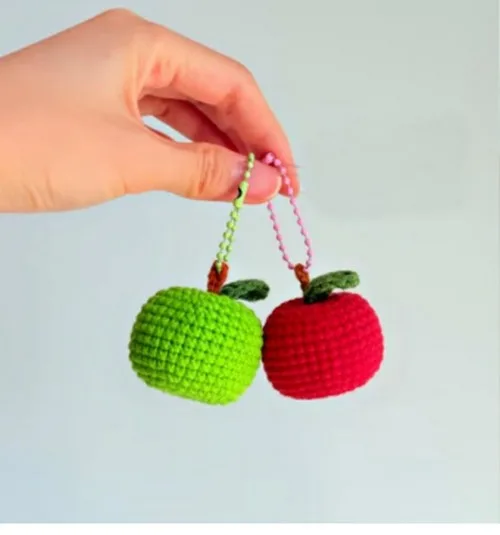
A stuffed apple charm in single crochet, 17 shaping rounds, 2.0mm hook, finished with a crocheted brown stem and green
Crochet Rituals · retyped from the source and laid out for print · added 15 Sep 2026
What the pattern's own author called it. Nothing here is graded again.
What the sample was worked in. Any weight works; the size moves with it.
Each one is typed out whole and gets its own line.
This apple charm builds from a magic ring into a rounded body worked entirely in single crochet, shaped through a short run of increases, a stretch of straight rounds, and a decrease sequence that pulls the top closed. A dimple stitched through the center gives it the pinched look of a real apple, and a brown chain forms the stem and keychain loop, with a crocheted green leaf sewn alongside it. Have red, brown, and green worsted-weight yarn, a 2.0 mm hook, fiberfill, a yarn needle, and scissors on hand before starting.
Listed by the pattern's own author, in their words.
Key to this pattern, 10 short forms
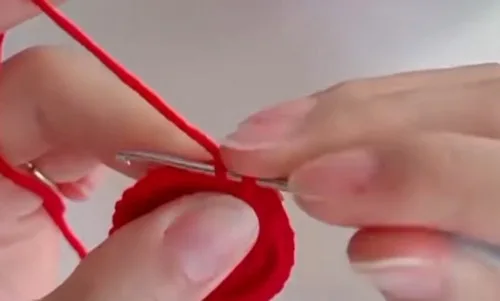
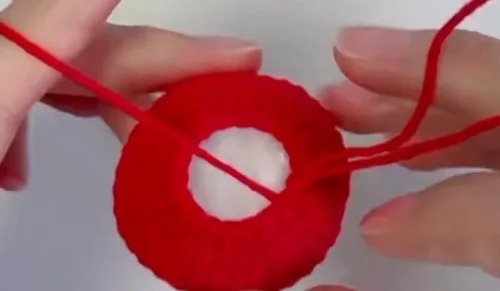
Begin with a magic ring and work 6 single crochets into the ring (6 stitches).Step by step: begin with a magic ring; work 6 single crochets into the ring; pull the yarn tail to tighten the loop.
Make 2 single crochets in each stitch around (12 stitches).
1 single crochet, 1 increase — repeat around (18 stitches).
1 single crochet, 1 increase, 1 single crochet — repeat around (24 stitches).
3 single crochets, 1 increase — repeat around (30 stitches).
Work 1 single crochet in each stitch (30 stitches per round).
2 single crochets, 1 decrease — repeat around.
2 single crochets, 1 decrease — repeat around (approx. 24 stitches).
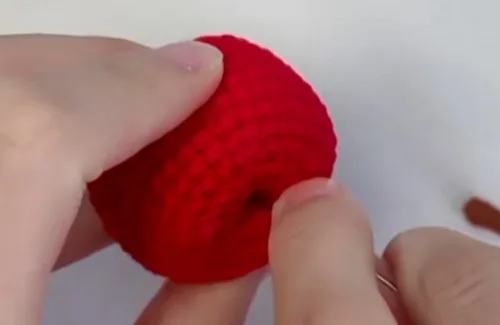
Work 1 chain to lock, continue with plain single crochet stitches in each stitch.
3 single crochets, 1 decrease — repeat around.
2 single crochets, 1 decrease — repeat around.
Chain 10 with brown yarn. Work into the 5th chain from the hook and pull through the back loop. Slip stitch or single crochet along the rest of the chain. Cut yarn with a long tail and tie the two ends together.
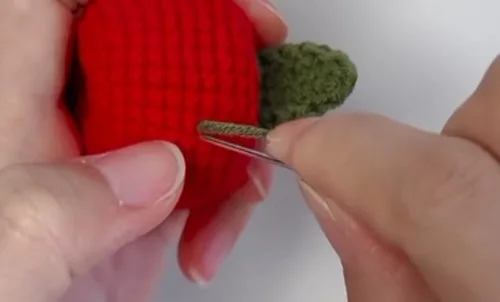
With green yarn, chain 8. Starting from the 2nd chain from the hook, work 1 single crochet, 1 half double crochet, 3 double crochets (one in each of next 3 stitches), 1 half double crochet, 1 single crochet. In the last stitch, work 3 half double crochets to round the tip. Work along the opposite side of the chain: 1 half double crochet, 3 double crochets, 1 half double crochet. Finish with a slip stitch into the first stitch. Cut yarn with a long tail for sewing.
| Rounds | 13 |
|---|---|
| Parts | 6 |
| Level | Beginner |
| Time | 1-2 hours |
| Hook | 2.0 mm |
| Yarn | Worsted |
The increase rounds add six stitches per round (12, 18, 24, 30) with the extra stitch worked further from the previous increase each time, spacing the shaping evenly so the widening body stays round rather than pointed.
Round 15 inserts a single locking chain in the middle of the decrease sequence before returning to plain single crochet, stabilizing the stitch count partway through the shaping so the following decrease rounds start from a fixed base.
The leaf combines single crochet, half double crochet, and double crochet worked along both sides of a chain 8, with 3 half double crochets in the final stitch to round the tip, so the graduated stitch heights curve the piece into a pointed leaf shape.
| Increasing rounds | about 15-20 minutes because four rounds climb from 6 to 30 stitches and need careful counting |
|---|---|
| Straight rounds | about 20-25 minutes because seven rounds at 30 stitches each build most of the apple's body |
| Shaping decreases and finishing | about 20-30 minutes because the decrease rounds, locking chain, dimple stitching, and stem take fiddly hand-finishing |
| Stem and leaf | about 10-15 minutes because the stem chain, leaf shaping, and sewing the pieces to the apple body add fine hand-finishing detail |
Every one was taken by whoever published the pattern, in the order the source listed them.
These answers came from whoever first published the pattern, kept word for word.