Skip to the patterns
Crochet·Rituals
Menu

Scarves & Wraps 4 Laid out for paper No account, no download

How to crochet a two-color zigzag scarf

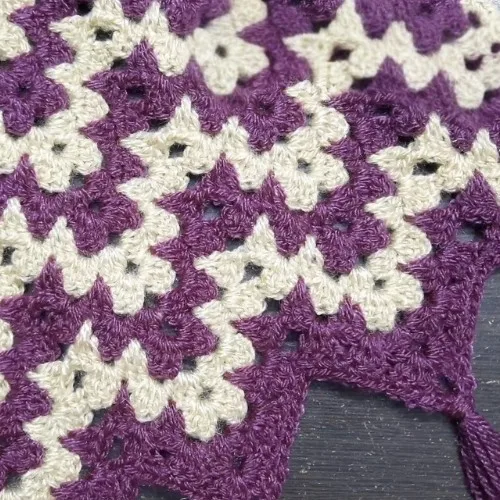
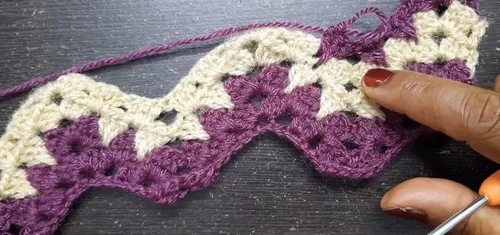
Two-color zigzag scarf, 15 rows, 3.5mm hook. 65 x 10 inches, adjustable.

Jump to the rounds Pin it
How to crochet a two-color zigzag scarf
Scarves & Wraps · DK
Skill
Intermediate
Time
4-6 hours
Yarn weight
DK
Hook
3.50 mm
Rounds
4

Intermediate

What the pattern's own author called it. Nothing here is graded again.

DK

What the sample was worked in. Any weight works; the size moves with it.
4

Each one is typed out whole and gets its own line.

This scarf is built from a single foundation chain of 60 stitches, worked flat in rows so that clusters of double crochet stitches and ch-3 spaces stack into a repeating zigzag across the width. Two colors of three-ply wool play the peaks and valleys against each other over 15 rows total. Before you sit down with it, have both colors wound and ready, a 3.50 mm hook to hand, and a clear read of the first row, since every later row depends on that same cluster spacing.

Common mistakes and their fixes

Miscounting the 60-chain foundation
Count the starting chain in groups of ten before turning to Row 1, since a short or long chain throws off every cluster repeat that follows.
Skipping the wrong number of chains at the start
Skip exactly 3 chains before the first dc in the 4th chain from the hook, every row, or the first peak of the zigzag will sit off-center.
Uneven stitch count inside each cluster
Confirm 2 dc, then ch 3, then 3 dc land in the same stitch each time; recount the repeat if the zigzag points start to lean.

The materials list

  1. Three-ply wool yarn in two colors
  2. Size 3.50 mm crochet hook
  3. Scissors
  4. Yarn needle

Listed by the pattern's own author, in their words.

Key to this pattern, 4 short forms

Measurements

Length: 65 inches (adjustable)

Width: 10 inches (adjustable)

Abbreviations: ch: chain st: stitch dc: double crochet sl st: slip stitch Pattern

Round 1

Ch 60. Skip 3 ch, dc in 4th ch from hook. 2 dc in same ch, 3 ch, 3 dc in same ch. Repeat from to across row.Turn.

Round 2

Ch 3 (counts as first dc), dc in each of the next 2 dcs. Skip next 3 dcs, dc in next 3 dcs.Skip next 2 dcs, dc in next 3 dcs. Repeat from to across row.Ch 3, turn.After Row 3: Skip next 2 dcs, dc in next 3 dcs.Skip next 2 dcs, dc in next 3 dcs. Repeat from to across row.Ch 3, turn.

Round 4

Skip next 5 dcs, dc in next 3 dcs. Skip next 2 dcs, dc in next 3 dcs. Repeat from to across row.Ch 3, turn.

Round 5

Skip next 2 dcs, dc in next 3 dcs. Skip next 2 dcs, dc in next 3 dcs. Repeat from to across row.Ch 3, turn.For Row 6: Dc in each of the next 3 dcs.3 ch, 3 dc in same ch. Repeat from to across row.Turn.Repeat Rows 2-6 until desired length is reached.

Assembly, in order

Step 1Fasten off and weave in ends.
Step 2(Optional) Add tassels or fringe to the ends of the scarf.

Check these before you start

  • The 3.50 mm hook is sized to keep the ch-3 spaces open enough for the zigzag to read clearly; sizing down will tighten the points and shorten the finished width.
  • Place a marker at the first stitch of each row if you are working the two colors in stripes, so you always know which side to pick the next color up from.
  • Keep tension even across each 3-dc cluster; a loose cluster next to a tight one will throw off the zigzag line more than an uneven row length will.

On one line

Rounds4
LevelIntermediate
Time4-6 hours
Hook3.50 mm
YarnDK

Set-up

  • Check that you have enough yarn in both colors for a 65-inch length before winding a single ball into use, since the scarf runs long and adjustments to length change how much you need.
  • Work a small swatch of the dc and ch-3 cluster repeat first to see how wide your zigzag sits at 3.50 mm, since width is listed as adjustable and depends on your tension.
  • Read Row 1 in full before starting the chain, so the skip-3, dc-in-4th-ch, and ch-3-space sequence is clear in your head before you commit to 60 chains.
  • Decide up front where the two colors change if you plan stripes rather than solid rows, and have a plan for carrying or cutting yarn at the row ends.

Finishing

  1. Fasten off and weave in every end, including any carried between color changes, so no tails show through the open ch-3 spaces.
  2. Block the scarf flat to open the zigzag repeat evenly along the full 65-inch length and 10-inch width before wearing it.
  3. Add tassels or fringe to both short ends if you want them, once blocking has set the shape.

Construction

The zigzag comes from working 2 dc plus a ch-3 space in the same stitch at set intervals along the row; each of those repeats is one peak, and the skipped stitches between them fall as the valleys.

The scarf is worked flat, turning at the end of every one of its 15 rows, because the cluster pattern has to be read and placed row by row across the 60-chain width rather than joined in the round.

Time per section

Foundation chain and Row 1about 20 minutes because chaining 60 stitches and reading the first cluster repeat takes more care than later rows
Rows 2 through 15about 3 to 4 hours because 14 more rows repeat the same dc and ch-3 cluster pattern across the full width
Finishing and optional fringeabout 30 minutes because weaving in ends from two colors and adding fringe are the only steps left

Photographs of this one

Every one was taken by whoever published the pattern, in the order the source listed them.
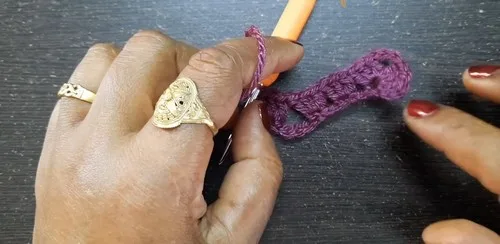
How to crochet a two-color zigzag scarf — photo 2
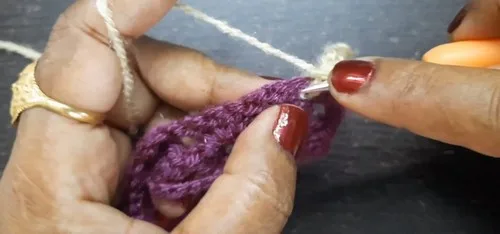
How to crochet a two-color zigzag scarf — photo 3
How to crochet a two-color zigzag scarf — photo 4

Common questions

Can the scarf be made longer or shorter than 65 inches?
Yes, length is listed as adjustable, so add or remove chains from the multiple used in the foundation before Row 1. Keep the repeat count even so the zigzag pattern still lines up across the row.
Do I have to use two colors?
No, the two-color layout is a design choice, not a structural one. Working the full 15 rows in a single color will not change the zigzag shape formed by the dc and ch-3 clusters.
Why is the scarf worked flat instead of in the round?
The zigzag repeat is built row by row from the 60-chain foundation, with each row turned rather than joined. Working it flat keeps the cluster placement consistent across the 10-inch width.

These answers came from whoever first published the pattern, kept word for word.